What Is the FWC Boating Certificate and Do You Need One?
If you’re planning to operate a motorized vessel in Florida, understanding the FWC boating certificate is essential. The Florida Fish and Wildlife Conservation Commission (FWC) requires boaters to demonstrate competency in boating safety before taking the helm. This article explains what the FWC boating certificate is, who needs one, and how you can earn it through NASBLA-accredited online courses like those offered by TakeMyBoatTest.com.
Understanding the FWC and Its Role in Boating Safety
The Florida Fish and Wildlife Conservation Commission (FWC) is the state agency responsible for managing Florida’s natural resources, including its fisheries, wildlife, and boating safety programs. The FWC doesn’t issue boating certificates directly—instead, it sets the standards and requirements that accredited course providers must meet. These providers, like TakeMyBoatTest.com, deliver the education that satisfies FWC boating safety requirements.
The FWC’s boating safety certificate (also called a Boater Safety Identification Card or Boater ID Card) is proof that you’ve completed an approved boating safety education course. This certificate demonstrates that you understand the rules of the road, know how to operate a vessel safely, and are familiar with Florida boating laws.
What Is the FWC Boating Safety Certificate?
The FWC boating certificate is an official identification card that proves you’ve completed an approved boating safety education course. It’s not a license in the traditional sense—you don’t need to renew it or take recurring tests. Instead, it’s a one-time certification that shows you’ve met Florida’s boating safety education requirement.
The certificate includes:
- Your name and date of birth
- A unique identification number
- The course completion date
- The issuing organization’s name
- An official seal or hologram for fraud prevention
This card is valid for life in Florida and is recognized by law enforcement, park rangers, and other boating authorities throughout the state. It’s small enough to fit in your wallet and durable enough to withstand water exposure.
Why Does Florida Require a Boating Certificate?
Florida’s boating safety education requirement exists to reduce accidents, injuries, and deaths on the water. Boating is a popular recreational activity in Florida—the state has over 1 million registered vessels—and many operators lack formal training in vessel operation, navigation, and water safety.
The FWC reports that operator inexperience is a leading cause of boating accidents. By requiring boating safety education, the state ensures that boat operators understand:
- How to operate their vessel safely
- Navigation rules and right-of-way
- How to use and maintain safety equipment
- Emergency procedures
- Alcohol’s effects on boating ability
- Environmental protection responsibilities
This education has proven effective: states with boating safety requirements generally report lower per-capita boating accident rates than those without mandatory education.
Who Needs an FWC Boating Certificate?
Not every boater needs an FWC boating certificate in Florida. The requirement depends on your age, the type of vessel you’re operating, and your role in the vessel.
Birth Date Requirement:
If you were born on or after January 1, 1988, you must have a boating safety certificate to operate a motorized vessel (over 10 horsepower) in Florida. This is the core requirement that affects most modern boaters.
If you were born before January 1, 1988, you are not required to have a boating certificate to operate a motorized vessel—you’re exempt due to the “grandfather clause.” However, the FWC still strongly recommends that all boaters take a safety course, regardless of age.
Vessel Type:
The requirement applies to operation of motorized vessels over 10 horsepower. If you’re operating a sailboat with no motor, a vessel under 10 horsepower, or a non-motorized boat (like a canoe or kayak), you are not required to have a certificate, though safety education is always recommended.
Rental Situations:
If you’re renting a motorized vessel and were born after January 1, 1988, you need a boating certificate. Many rental operators require customers to provide proof of certification before allowing them to rent. TakeMyBoatTest.com offers both permanent and temporary certificates—the temporary certificate is perfect for visitors and renters who need quick certification.
Who Is Exempt from the FWC Boating Certificate Requirement?
Several categories of boaters are exempt from Florida’s boating certificate requirement:
Age-Based Exemption:
Anyone born before January 1, 1988, is exempt from the requirement. This exemption was established to avoid requiring recertification of experienced boaters who were already operating vessels before the law changed.
Commercial Operators:
Captains and operators with commercial licenses (such as those holding a Florida Commercial Captain license) may have different requirements depending on their specific license type. If you operate a charter vessel or commercial boat, consult the FWC about specific certification needs for your situation.
Military and Coast Guard Personnel:
Some military personnel may be exempt or have alternative certification pathways. Check with the FWC if you have military boating experience.
Non-Motorized Vessels:
Operators of canoes, kayaks, rowboats, paddleboards, and other non-motorized vessels are not required to have a certificate, though safety education is recommended.
What Does the FWC Boating Safety Course Cover?
An FWC-approved boating safety course covers the core knowledge and skills required for safe vessel operation in Florida. NASBLA-accredited courses, including TakeMyBoatTest.com, cover:
Navigation and Right-of-Way Rules:
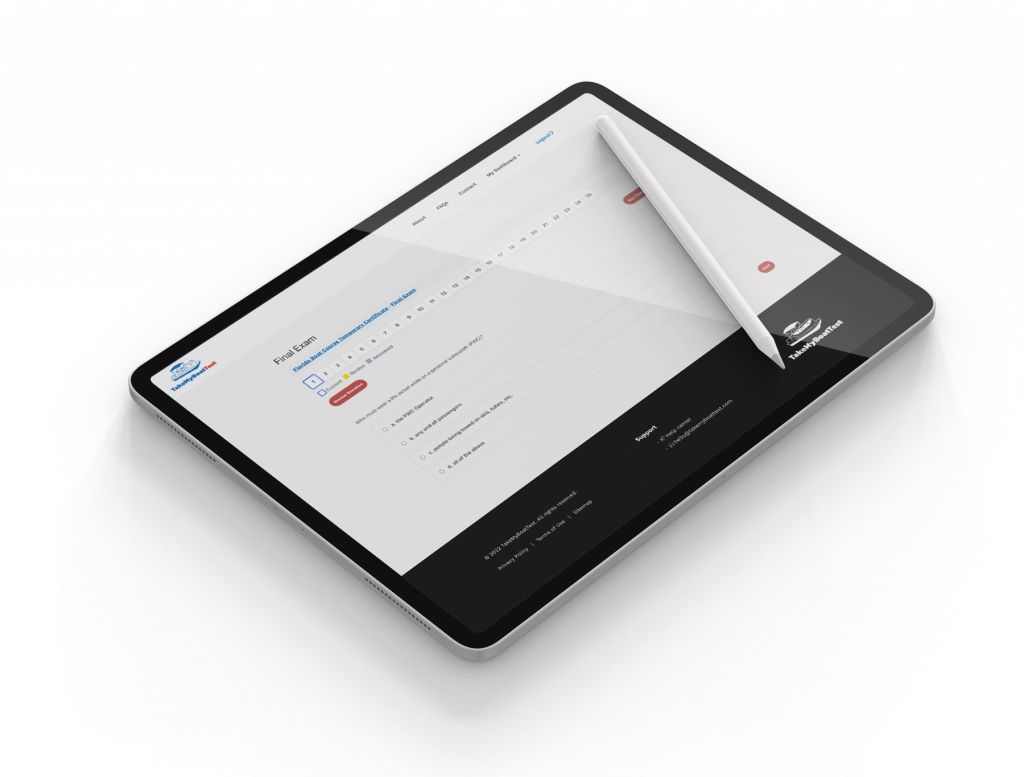
Ready to get your FWC Boating Safety Education ID?
Take our NASBLA-accredited, FWC-approved Florida Boating Safety Course online. Self-paced, mobile-friendly, guaranteed to pass or your money back. Lifetime certification — no renewals needed.